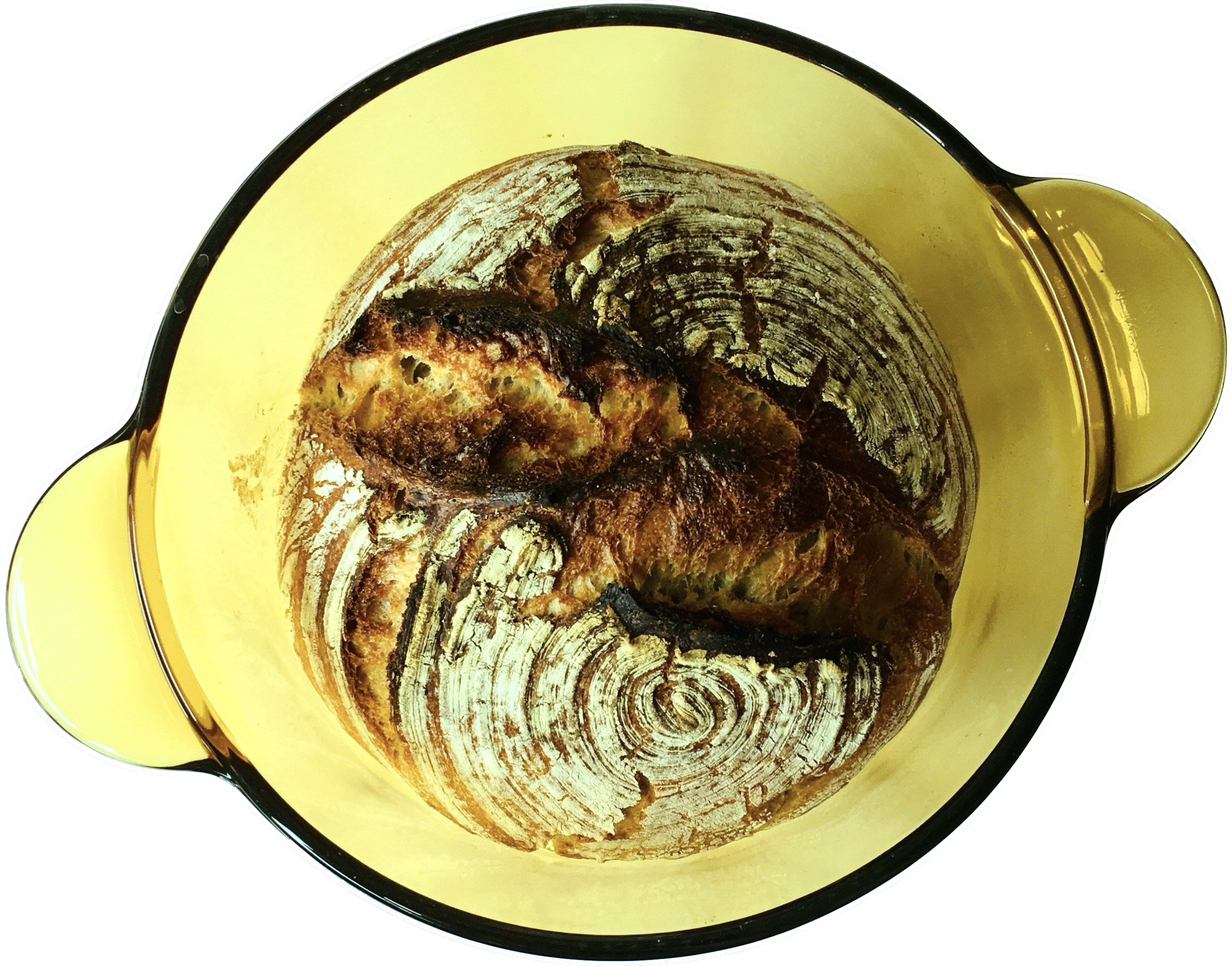
Hands kneading soudough bread dough

The Protocol

Baking for flavor is art. Baking for digestion is science.

If you scroll through Instagram, sourdough is an aesthetic. It’s about the open crumb, the blistering crust, and the perfect "ear." But if you look through a microscope, sourdough is a high-density microbial metropolis.

For the human host, the goal isn't just a pretty loaf. It is a functional one. The difference between a loaf that spikes your blood sugar and one that nourishes your gut isn't magic—it is a result of specific, controllable variables in the fermentation environment.

Recipes teach you how to bake. This protocol teaches you how to optimise your sourdough for improved digestion, nutrient content and health.

Variable 1: The Acid Balance

Goal: Glycemic Control

Not all acids are created equal. Your starter produces two primary acids: lactic acid (creamy, yogurt-like) and acetic acid (sharp, vinegary).

From a flavor perspective, this is a matter of taste. From a biological perspective, it is a matter of glycemic control.

Research indicates that acetic acid is significantly more effective at delaying "gastric emptying"—the rate at which food leaves your stomach and enters your small intestine [1]. By slowing this process, acetic acid blunts the post-meal glucose spike, effectively lowering the glycemic index (GI) of the bread [2].

Protocol
To bias your starter toward acetic acid production, maintain it as a "stiff" levain (50–60% hydration).
Why? The key bacterium Fructilactobacillus sanfranciscensis tends to thrive in these stiffer, anaerobic environments, and the stress of low hydration encourages the production of acetic acid over lactic acid.

Variable 2: The Mineral Lock

Goal: Bioavailability

A grain kernel is a survival capsule. It hoards essential minerals like iron, zinc, magnesium, and calcium using a molecule called phytic acid.

Phytic acid acts as a "chelator"—it binds tightly to these minerals, forming insoluble salts that pass through your digestive tract unabsorbed. If you eat quick-fermented bread, the mineral content on the label is theoretically there, but biologically inaccessible [3].

To pick the lock, you need an enzyme called phytase. Wheat possesses endogenous phytase, but it is dormant at neutral pH. It requires an acidic trigger to wake up.

For a biological advantage, introduce rye. Rye flour contains significantly higher phytase activity than wheat [4]. Adding just 10-20% rye to your starter acts as a catalyst, dismantling the mineral lock far more efficiently than wheat can alone.

Diagram of how bacteria use acidity and enzymes to break bonds and hold minerals, featuring a hexagon labeled 'Phytic Acid' with scissors icons cutting lines to circles labeled 'Calcium,' 'Zinc,' and 'Iron'
Protocol
You must drop the pH of your dough below 5.5 to activate the phytase enzyme.
While commercial yeast fermentation (typically 1–2 hours) reduces phytates by only 38%, a sourdough fermentation of 4–24 hours can achieve reductions of up to 90% [5]. The "mineral release curve" is exponential: the longer the bulk fermentation, the more nutritious the loaf. 

Bonus: Use 10-20% rye when feeding your starter to supercharge mineral bioavailability.

Variable 3: The Enzymatic Cleavage

Goal: Immunogenicity Reduction

Gluten is a marvel of food chemistry, but for many, it is an inflammatory trigger. This is largely due to its high content of proline and glutamine—amino acids that form tight peptide bonds resistant to human digestive enzymes.

Specific sequences, such as the 33-mer peptide, are identified as the primary immunotoxic triggers in celiac disease and sensitivity [6].

Sourdough offers a unique solution: Proteolysis.

During a long fermentation, the lactic acid bacteria release their own proteolytic enzymes to break down proteins for fuel. These bacterial enzymes are capable of cleaving the specific proline-rich bonds that human enzymes cannot, significantly reducing the gluten load, though not eliminating it entirely for those with Celiac disease.

Note: The Fructan Distinction (It’s Not Always Gluten)

Many people who believe they are gluten-sensitive are actually reacting to Fructans—fermentable carbohydrates (FODMAPs) that the human gut struggles to break down, causing bloating and IBS symptoms.

While yeast-raised bread leaves these sugars intact, sourdough bacteria devour them. Research confirms that a long fermentation (4+ hours) can reduce fructan levels in wheat dough by up to 90%, effectively transforming a high-FODMAP food into a low-FODMAP one [7].

Protocol
Time and hydration are your levers.

Time: Studies show that long-fermented sourdough can degrade these specific immunogenic epitopes, significantly reducing the "antigenic load" of the bread [8].

Hydration: Protease enzymes function more efficiently in a fluid environment. A higher hydration dough facilitates this microscopic demolition work.

Variable 4: The Neuro-chemical Shift

Goal: GABA Production

Your starter is also a factory for bioactive compounds. One of the most compelling is GABA (gamma-aminobutyric acid), the brain's primary inhibitory neurotransmitter. It is the chemical signal for "calm”, potentially influencing mood and stress regulation through the gut-brain axis.

Certain strains of LAB, particularly Lactobacillus brevis and Lactobacillus plantarum, possess the enzyme glutamate decarboxylase (GAD). This enzyme converts the abundant glutamate in wheat flour into GABA [9].

Protocol
Unlike the cold retard used for flavor, GABA production peaks at warmer temperatures, around 30°C [9]. Including a warm "bulk fermentation" phase before your cold proof can optimise the accumulation of this neurotransmitter.

Variable 5: The Retrogradation Hack

Goal: Prebiotic Fiber

The health potential of your bread doesn't end when you pull it from the oven. In fact, one of its most critical features develops after baking.

When starch is heated and then cooled, it undergoes a process called retrogradation. The amylose molecules recrystallise into a tight structure known as Resistant Starch (Type 3).

This structure resists digestion in the small intestine, meaning it doesn't spike blood sugar. Instead, it travels to the colon, where it feeds your beneficial gut bacteria—acting as a prebiotic fiber.

Protocol
The "Cryo-Baking" Method.
Bake your loaf.
Cool it completely.

Freeze it. Research suggests that the cycle of freezing and then toasting the bread maximises the formation of resistant starch, significantly lowering the glycemic response compared to fresh bread [10].

The optimised loaf is not an accident. It is a product of biological engineering.

  • Substrate: Stiff starter (for acetic acid).

  • Trigger: pH < 5.5 (for phytase activation). Bonus: Add 10-20% rye in your starter feed.

  • Duration: 24h+ total fermentation (for gluten degradation).

  • Temperature: Warm bulk (for GABA), Cold proof (for control).

Post-Process: Freeze and toast (for resistant starch).

Summary

References

  1. Liljeberg, H., & Björck, I. (1998). Delayed gastric emptying rate may explain improved glycaemia in healthy subjects to a starchy meal with added vinegar. European Journal of Clinical Nutrition.

  2. Ostman, E., et al. (2005). Vinegar supplementation lowers glucose and insulin responses and increases satiety after a bread meal in healthy subjects. European Journal of Clinical Nutrition.

  3. Lopez, H. W., et al. (2001). Prolonged fermentation of whole wheat sourdough reduces phytate level and increases soluble magnesium. Journal of Agricultural and Food Chemistry.

  4. Nielsen, M. M., et al. (2007). Phytase activity and degradation of phytic acid during rye bread making. European Food Research and Technology.

  5. Leenhardt, F., et al. (2005). Moderate decrease of pH by sourdough fermentation is sufficient to reduce phytate content of whole wheat flour through endogenous phytase activity. Journal of Agricultural and Food Chemistry.

  6. Shan, L., et al. (2002). Structural basis for gluten intolerance in celiac sprue. Science.

  7. Ziegler, J. U., et al. (2016). Wheat and the irritable bowel syndrome – FODMAP levels of modern and ancient wheat species and their retention during bread making. Journal of Functional Foods.

  8. Rizzello, C. G., et al. (2007). Highly efficient gluten degradation by lactobacilli and fungal proteases during food processing: new perspectives for celiac disease. Applied and Environmental Microbiology.

  9. Diana, M., Quílez, J., & Rafecas, M. (2014). Sourdough bread enriched with γ-aminobutyric acid (GABA): A comparison of free amino acid, biogenic amine and acrylamide content. Journal of Cereal Science.

  10. Burton, P., & Lightowler, H. J. (2008). The impact of freezing and toasting on the glycaemic response of white bread. European Journal of Clinical Nutrition.

Last updated: 8 December, 2025