
The Oxytocin Loop: Baking as Social Biology
There is a specific, warm feeling that accompanies the act of placing a fresh loaf of bread in the centre of a table. It is a sensation distinct from the satisfaction of eating. It is the satisfaction of feeding.
We often describe this as "love." But to a biologist, love is a chemical event.
At the molecular heart of this experience is Oxytocin, the neuropeptide hormone responsible for social bonding, trust, and maternal attachment. For years, we assumed that the oxytocin released during communal meals was purely a product of human interaction.
But new research suggests a stranger possibility: the bacteria in the bread might be triggering the release themselves.
The "Love Bug": Lactobacillus reuteri
The story begins in a lab at MIT in 2013. Researchers were studying Limosilactobacillus reuteri, a bacterium commonly found in the human gut and in some traditional sourdough cultures.
They fed this bacterium to mice and observed a startling transformation. The mice didn't just get healthier; they got "glow-ups." Their fur became thick and shiny. They healed wounds twice as fast as the control group. And, most importantly, they became more social [1].
When the researchers analysed the blood of these mice, they found significantly elevated levels of oxytocin. The bacteria were stimulating the vagus nerve, sending a signal to the brain to release the "cuddle chemical." This result was so profound that L. reuteri earned the nickname "The Love Bug."
The Ghost in the Crumb
Crucially, follow-up studies revealed that the bacteria did not need to be alive to pull this lever. When researchers fed mice a "lysate" (a soup of heat-killed L. reuteri), the oxytocin surge happened anyway [2].
This has profound implications for sourdough. We know that L. reuteri and related heterofermentative Lactobacilli are key players in sourdough fermentation (to cultivate these specific strains for mental health benefits, see Protocol 02: The Calm Loaf). Even though the oven kills the organisms, their cell walls—the "ghosts"—remain in the bread.
This suggests that a slice of sourdough is potentially a paraprobiotic delivery system for oxytocin upregulation. The bread doesn't just nourish you; it chemically signals your brain to feel safe, connected, and healed.
The Evolutionary Loop
Why would a bacterium evolve to make its host feel love?
In evolution, altruism is rarely accidental. It is a survival strategy. This is the Oxytocin Loop.
The Signal: The microbe (L. reuteri) triggers an oxytocin release in the host.
The Behaviour: High oxytocin levels promote social bonding, trust, and—crucially—sharing [3].
The Transmission: By encouraging the host to share food and break bread with others, the bacterium increases its chances of transmission to new hosts (historically, before modern hygiene, microbes were easily transferred via hands and food).
The bacteria are not just passengers; they are social engineers. They encourage us to gather, to trust, and to eat together, because that is how they survive.
Breaking Bread: An Evolutionary Necessity
This biological loop mirrors the anthropological findings of Professor Robin Dunbar, who studies the evolution of social networks. His research highlights that "breaking bread" is not just a calorie transfer; it is a mechanism for priming the endorphin and oxytocin systems that bond a community [4].
In this light, the baker plays a critical role in the species. By fermenting grain, following methods like The Calm Loaf, you are creating a vehicle for this chemical diplomacy..You are not just making food; you are manufacturing the molecular substrate for trust.
In Sum
When you bake a loaf and feel that urge to give it away—to drop it on a neighbour's porch or slice it for your family—you are fulfilling an ancient biological pact.
The bacteria did their part: they unlocked the grain and signaled your brain to connect. The rest is up to you.
References
Poutahidis, T., Kearney, S. M., Levkovich, T., Qi, P., Varian, B. J., Lakritz, J. R., ... & Erdman, S. E. (2013). Microbial symbionts accelerate wound healing via the neuropeptide hormone oxytocin. PLOS ONE.
Varian, B. J., Poutahidis, T., DiBenedictis, B. T., Levkovich, T., Ibrahim, Y. M., Didyk, E., ... & Erdman, S. E. (2017). Microbial lysate upregulates host oxytocin. Brain, Behavior, and Immunity.
Zak, P. J., Stanton, A. A., & Ahmadi, S. (2007). Oxytocin increases generosity in humans. PLOS ONE.
Dunbar, R. I. M. (2017). Breaking Bread: the Functions of Social Eating. Adaptive Human Behavior and Physiology.
Last updated: 22 December, 2025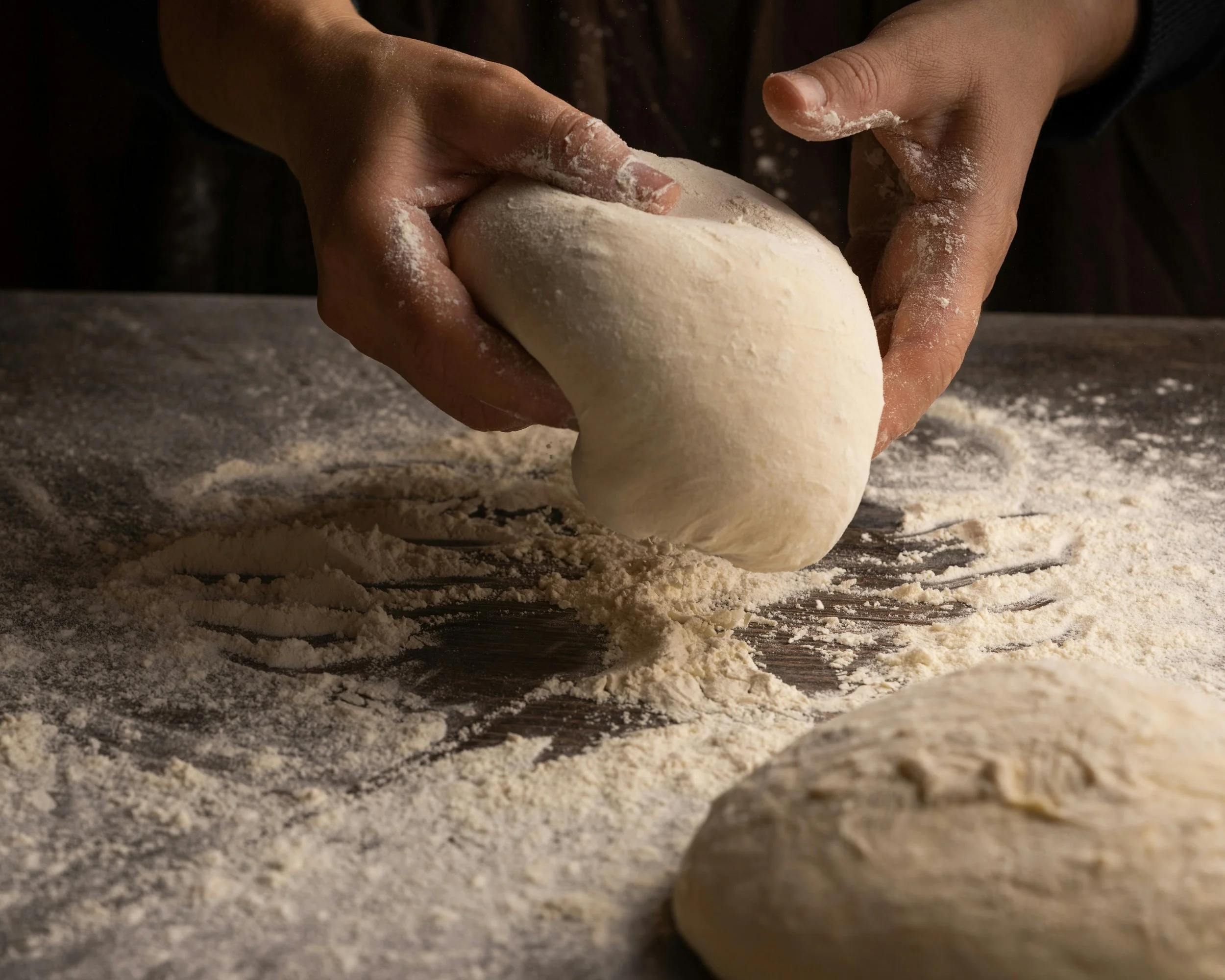

Red Fife is Canada's oldest wheat. Unlike modern "monoculture" wheat, Red Fife is a landrace, meaning there is significant genetic diversity within a single bag of flour. This diversity translates directly to the palate.