The Handshake: The Baker's Skin Microbiome
There is a moment in bread making that feels almost ceremonial. It is the moment you abandon the spoon, reach into the bowl, and bring your hands into the dough. It is a gesture of intimacy—a physical pact between the maker and the made.
Poets call this "putting love into the loaf." Biologists call it inoculation.
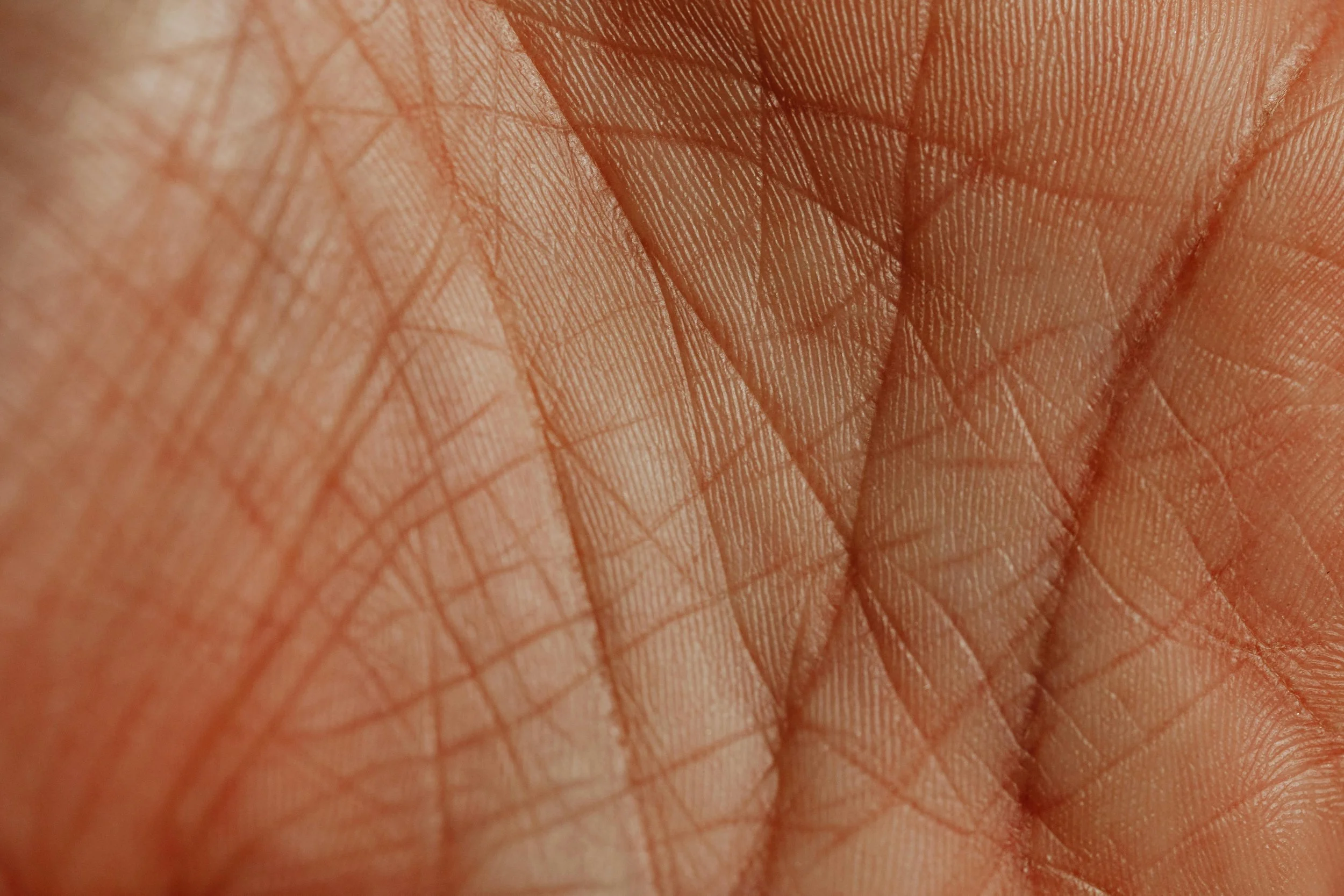
Your hands are not sterile tools. They are a thriving ecosystem, a landscape of ridges and valleys populated by millions of bacterial residents.
When you knead a loaf, you are not just shaping structure; you are performing a biological handshake.
You are introducing your own microbial signature to the dough.
This raises a profound question in the science of sourdough: Does the bakers microbiome affect the microbial state of the bread?
The Skin Flora: Who Is On Your Hands?
To understand the handshake, we must first look at the residents of the human palm. The human skin microbiome is dominated by genera that are distinct from the typical sourdough ecosystem. While your starter is a city of Lactobacillusand Saccharomyces, your skin is the realm of Staphylococcus, Streptococcus, Propionibacterium, and Corynebacterium[1].
These organisms are adapted to the cool, dry, slightly acidic, and salty terrain of your epidermis. They feed on sebum and dead skin cells. Every time you touch your dough, you are transferring thousands of these cells and their bacterial hitchhikers into the mix.
For decades, microbiologists assumed these "skin bugs" were merely transient tourists—accidental contaminants that were quickly killed off by the acidic environment of the sourdough. But recent research suggests the relationship is far more complex.
The Acid Firewall
Sourdough is an exclusionary environment. As the Lactic Acid Bacteria (LAB) ferment the grain, they produce lactic and acetic acids, driving the pH of the dough down to 3.5–4.0. This is the Acid Firewall.
Most of your skin flora are "neutrophiles"—they thrive at a neutral pH of around 5.5 to 7.0. When they are plunged into the acidic world of a mature starter, most of them perish. Staphylococcus epidermidis, the most common bacterium on human skin, generally struggles to survive the aggressive acidification and antimicrobial bacteriocins produced by a healthy sourdough culture [2].
This is a biological safety feature. It is why you can stick your unwashed hands into dough and not create a biohazard. The starter sanitises itself, selecting only for the acid-tolerant organisms that drive fermentation.
However, the firewall is not perfect, and it is not immediate.
Terroir vs. Touch: The Dunn Lab Study
In 2020, a groundbreaking study by the Rob Dunn Lab at North Carolina State University challenged the old assumptions about "terroir." For years, bakers believed that the unique flavour of their bread came from the local air (the famous "San Francisco Fog" hypothesis).
The researchers took a different approach. They standardised the flour, the water, and the recipe, but they used 18 different bakers from around the world. If the flour and air were the only factors, the starters should have been identical. They weren't.
The study revealed two critical findings:
The Touch Imprint: The microbial communities in the starters shared species with the specific baker's skin. The bakers who had more diverse skin microbiomes tended to produce starters that were distinct from one another. The "hand flavour" was real. The study concluded that skin-associated bacteria could influence the early succession of the starter, steering the community toward specific flavour profiles even if those skin bacteria didn't become dominant in the final climax community [3].
The Bidirectional Exchange: Perhaps more surprisingly, the handshake went both ways. The study found that the hands of professional sourdough bakers looked different from the hands of non-bakers. Their skin microbiomes had been colonised by sourdough flora. The bread was effectively "baking the baker," seeding their hands with Lactobacillus and Saccharomyces [3].
The Flavour of You
So, does your starter look like you?
In the early stages of a new starter, yes. Your skin flora helps determine which strains of wild yeast and bacteria win the initial battle for territory. You are the "founder effect."
In a mature, established starter, the "flour flora" (microbes that ride in on the grain) typically dominate because they are better adapted to eating starch than eating skin oils [4]. However, your influence remains in the maintenance. The specific rhythm of your feeding, the temperature of your hands, and the hydration you prefer act as a selective pressure, constantly pruning the microbial city to match your habits.
The "terroir" of sourdough is not the geography of the land. It is the geography of the Handshake. It is the unique, bidirectional loop between the host and the symbiont.
When you bake, you are not working alone. You are mixing your biology with the biology of the grain, creating a culture that is, quite literally, a part of you.
References
Grice, E. A., & Segre, J. A. (2011). The skin microbiome. Nature Reviews Microbiology.
Gobbetti, M., Rizzello, C. G., Di Cagno, R., & De Angelis, M. (2014). How the sourdough may affect the functional features of leavened baked goods. Food Microbiology.
Reese, A. T., Madden, A. A., Joossens, M., Lacaze, G., & Dunn, R. R. (2020). Influences of Ingredients and Bakers on the Bacteria and Fungi in Sourdough Starters and Bread. mSphere.
Landis, E. A., Oliverio, A. M., McKenney, E. A., Nichols, L. M., Kfoury, N., Biango-Daniels, M., ... & Wolfe, B. E. (2021). The diversity and function of sourdough starter microbiomes. eLife.
Last updated: 10 December, 2025