Meet Your Baker: F. sanfranciscensis.
If you ask a stranger what makes bread rise, they will say "yeast."
And they are technically right. Yeast provides the lift. But if you ask a sourdough baker what makes bread sing—what gives it the tang, the texture, and the shelf-life—the answer is bacterial.
Specifically, it is a rod-shaped bacterium with a name that barely fits on a label: Fructilactobacillus sanfranciscensis.
This organism is the engine of the sourdough ecosystem. And its history is stranger than you think.
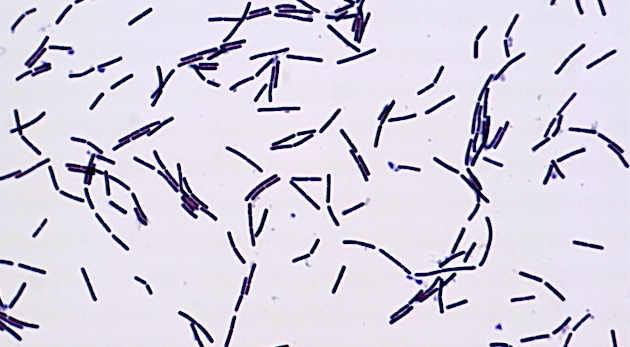
Fructilactobacillus sanfranciscensis under the microscope.The San Francisco Myth
In 1971, microbiologists Leo Kline and Frank Sugihara finally isolated the mystery bacterium responsible for the famous "San Francisco Sour" bread. Naturally, they named it after the city, cementing the idea that the foggy Bay Area climate was the secret ingredient [1].
But biology doesn't care about borders.
Genetic sequencing has since revealed that F. sanfranciscensis is a global citizen. It is the dominant species in traditional sourdough starters from Italy to France to Germany [2].
It doesn't matter where you live. If you maintain a traditional Type I sourdough starter, this is likely your co-pilot.
The Obligate Symbiont
Here is where the biology gets emotional.
Most bacteria are "generalists." They can live in soil, on skin, or in water. They are survivors.
F. sanfranciscensis is different. Over thousands of years of co-evolution with human bakers, it has undergone a process called reductive evolution.
It has genetically "shed" the tools it needs to survive in the wild. It cannot synthesise certain essential amino acids. It struggles to survive outside the specific, acidic, carbohydrate-rich, mineral-dense environment of a sourdough jar [3].
It has burned its bridges. It has committed to us.
In biology, this is called being an obligate symbiont. It needs the dough, and it needs the baker, just as much as we need it. This reclassification of the genus Lactobacillus in 2020 highlights just how distinct these organisms are [4].
The Insect Connection
If it can't survive well in the wild, and it isn't found on raw flour, how did it get into the first sourdough starter?
For years, this was a mystery. Did it fall from the air? Did it come from the baker’s hands?
Recent genetic analysis points to a more startling origin: Insects.
Strains of F. sanfranciscensis have been found in the digestive tracts of grain beetles and fruit flies [5].
The leading hypothesis is that the "Adam and Eve" of your sourdough starter weren't floating in the breeze. They likely arrived via the "frass" (droppings) of a tiny beetle that lived in a Neolithic grain store.
It wasn't human purity that created sourdough. It was a serendipitous contamination.
The Perfect Roommate
Why does this bug dominate the jar? Because it knows how to share.
In a sourdough starter, yeast and bacteria are fighting for resources. Usually, this is a war. But F. sanfranciscensis operates differently.
It has a unique metabolic trick: it takes up maltose but often releases excess glucose back into the dough. This creates a cross-feeding loop where the bacterium essentially 'pre-chews' sugar for the yeast, allowing both to thrive in densities that would kill other organisms [6, 7].
So when you feed your starter, remember: You aren't just making dough. You are keeping a very old, very loyal friend alive.
References
Kline, L., & Sugihara, T. F. (1971). Microorganisms of the San Francisco sour dough bread process II. Applied Microbiology.
De Vuyst, L., & Neysens, P. (2005). The sourdough microflora: biodiversity and metabolic interactions. Trends in Food Science & Technology.
Vogel, R. F., et al. (2011). Genomic analysis reveals Lactobacillus sanfranciscensis as stable element in traditional sourdoughs. Microbial Cell Factories.
Zheng, J., et al. (2020). A taxonomic note on the genus Lactobacillus: Description of 23 novel genera, emended description of the genus Lactobacillus Beijerinck 1901, and union of Lactobacillaceae and Leuconostocaceae. International Journal of Systematic and Evolutionary Microbiology.
Minervini, F., et al. (2017). Insect frass in stored cereal products as a potential source of Lactobacillus sanfranciscensis for sourdough ecosystem. Applied and Environmental Microbiology.
Gobbetti, M., Corsetti, A., & Rossi, J. (1994). The sourdough microflora. Interactions between lactic acid bacteria and yeasts: metabolism of carbohydrates. Applied Microbiology and Biotechnology.
Brandt, M. J., et al. (2004). Effects of process parameters on growth and metabolism of Lactobacillus sanfranciscensis and Candida humilis during rye sourdough fermentation. European Food Research and Technology.
Last updated: 6 December, 2025